Mapping AI Supplier Risk Assessments Across OWASP LLM Top 10 and NIST AI RMF Without Running Two Separate Programs
OWASP and NIST findings feed one supplier risk program when mapped as evidence.
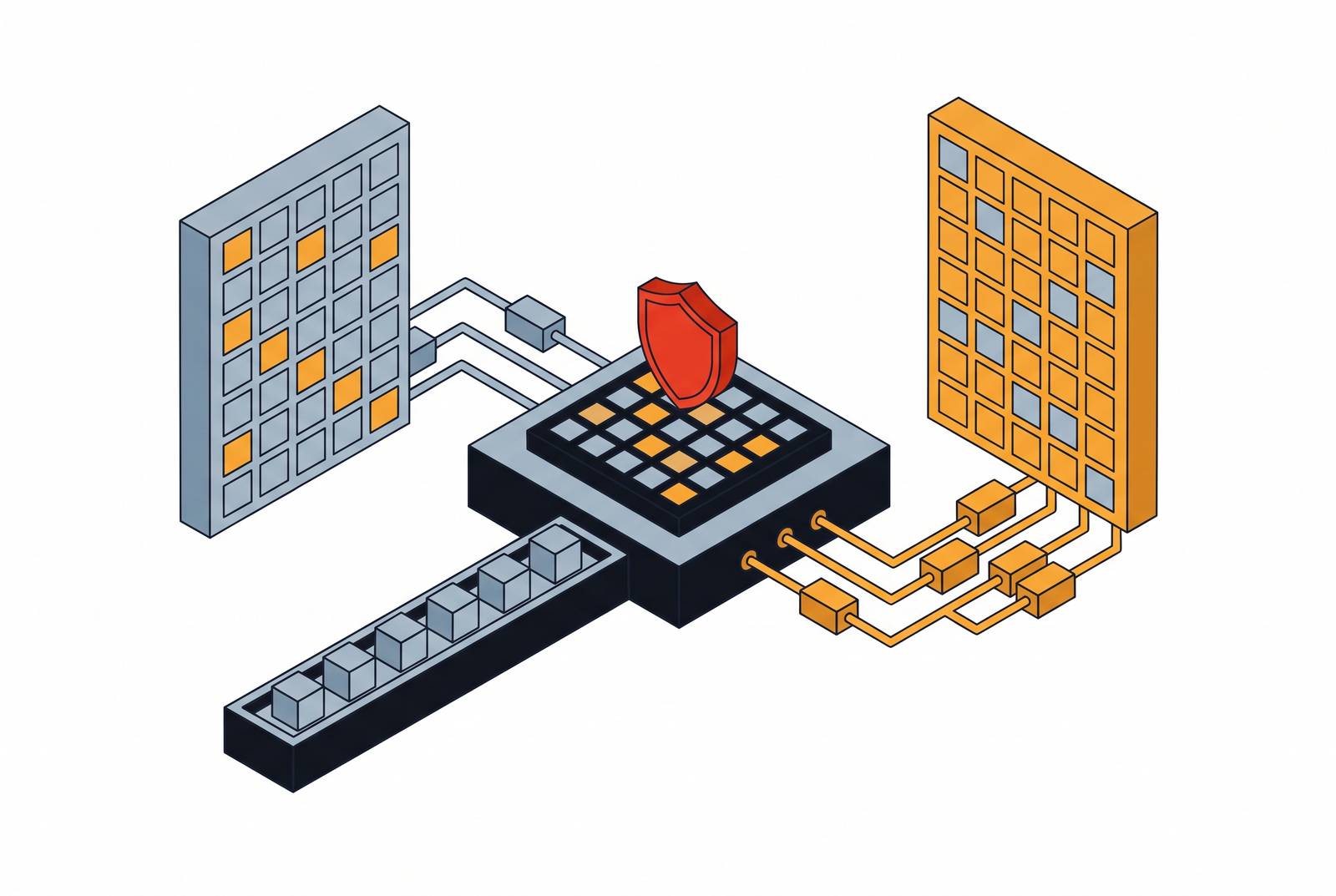
AI vendor risk assessment mapped to OWASP LLM Top 10 and NIST AI RMF works as one program when OWASP findings supply the evidence for NIST’s Govern, Map, Measure, and Manage functions. The crosswalk connects technical tests to supplier policies, component inventories, and risk responses. Continuous monitoring keeps those connections up to date as vendors change their models, dependencies, and agent permissions.
Why running OWASP LLM Top 10 and NIST AI RMF as two separate supplier programs creates the gaps it was meant to close
A CISO team can hold a completed pentest report and still struggle to answer a customer’s question about which RMF function its findings satisfy. The tests are done, but the evidence is stranded. Meanwhile, the team answering a NIST-organized supplier questionnaire asks for information that already exists in the security report. Translation happens after the deadline.
That split often begins when the frameworks arrive through different channels and land with different owners. Separate questionnaires, audit trails, and reporting chains follow. Yet OWASP’s entries name what can go wrong technically, while NIST’s functions set out who is responsible for managing those risks. Treating that vocabulary difference as a content difference is a design mistake and an inefficient use of staff.
Version differences add another source of confusion. OWASP released its 2026 edition on August 4, 2026, but both numberings circulate. As of October 8, 2026, the list page at genai.owasp.org still showed 2025 entries while the project page carried the 2026 release. A usable crosswalk therefore needs the entry name and edition alongside its number.
What each framework actually covers — and where each one stops
NIST AI RMF 1.0, published in January 2023, is voluntary and sector-agnostic. Its four functions describe a governance process. Govern establishes policies, accountability, and risk culture. Map establishes what a system does, whom it affects, and its attack surface. Measure addresses testing, evaluation, verification, and validation, while Manage covers priorities, responses, and documentation of action taken.
NIST AI 600-1, the July 2024 GenAI Profile, adds twelve generative AI risk categories and suggested actions across those functions. Its Information Security category covers threats such as prompt injection, data poisoning, and offensive cyber capabilities. Associated actions include adversarial testing, output monitoring, and auditing for unauthorized access. It does not specify how to implement them.
OWASP supplies the technical vocabulary that this process needs. Its entries help teams identify vulnerabilities and organize findings, but findings alone do not establish who accepts a supplier’s risk or what happens when it changes. Neither framework supplies the practitioner’s complete routing scheme. That is the crosswalk’s job. Their different scopes make them complementary, with neither replacing the other.
The three NIST functions that are explicitly scoped to supplier and supply chain risk
Supplier risk has explicit homes within three NIST functions. GOVERN 6 addresses policies for third-party software and data, including how vendor AI is vetted, contracted, and overseen. Agentic permissions, sub-processor disclosure, and change-notification requirements are part of the governance artifacts that belong here. They are not merely terms to negotiate and then file away.
MAP 4 covers risks across the components of an AI system, including those that third parties supply. It anchors the inventory before testing begins. For an LLM API integrated into an existing product, that means documenting the vendor model’s role, the people it affects, and the combined attack surface. Without that foundation, test results lack a clear account of what was in scope.
MANAGE 3 covers risks and benefits from third-party entities, including how to prioritize them, respond to them, and document them. These supplier-specific categories do not exclude Measure or other governance categories. A technically thorough assessment still leaves a NIST-aligned audit gap if it produces no third-party policy artifacts or component inventory.
How the 2026 OWASP entries route into NIST's supplier functions — the crosswalk in practice
The working crosswalk assigns findings to their risk category and the functions that use them. One finding can support more than one function. Findings for LLM04 Supply Chain pass through NIST AI 600-1’s Value Chain and Component Integration and Information Security categories to GOVERN 6 and MAP 4. A signed AI bill of materials, model artifact verification, and supplier vetting evidence connect policy to component provenance.
LLM05 Data and Model Poisoning spans Information Integrity, Value Chain and Component Integration, and Information Security. Its main destinations are MAP 4 for data lineage and MEASURE 2 for adversarial backdoor testing. The evidence comes from records of training data provenance and the results of fine-tuning red-team tests. LLM03 Excessive Agency routes through Information Security into MANAGE 1 and MANAGE 2 for the expanded blast radius of agentic tool-calling, with permission policy also feeding Govern.
LLM02 Sensitive Information Disclosure links the data access inventory in MAP 4 to privacy-enhanced testing in MEASURE 2.10 and the third-party data risk response in MANAGE 3. That route answers a familiar procurement question. How does the vendor prevent unauthorized disclosure of customer data? LLM01 Prompt Injection connects Information Security to Measure through adversarial testing and to Manage through incident response. Its supplier focus includes the indirect injection surface inherited through the vendor’s model and API alongside the deployer’s own application.
LLM08 Hidden Context Exposure routes to MAP 4 for the hidden context inventory and Measure for extraction testing. The scope includes non-user-facing instructions and operational context, particularly secrets, policy logic, tool schemas, and trust boundaries. LLM09 Vector and Embedding Weaknesses also routes to MAP 4, this time for retrieval-augmented generation data sources, and to Measure for retrieval permission testing. A vendor’s retrieval pipeline may reach sources the deployer never sees.
For LLM06 Unbounded Consumption, tests of rate limits and spending caps in Measure link to the availability response in Manage. LLM07 Misinformation connects output accuracy testing to human-in-the-loop policy, with MANAGE 3 relevant when a vendor’s model informs credit, fraud, or risk decisions. LLM10 Improper Output Handling links output validation tests to the protection of downstream systems. These routes organize existing evidence by its governance use. They do not require testing to start from scratch.
The AIBOM as the single artifact where OWASP's supply chain requirement and NIST's third-party governance requirement converge
An AI Bill of Materials, or AIBOM, makes the crosswalk tangible. It is a structured inventory of model weights, training datasets, fine-tuning data, software dependencies and frameworks, dependent models, and licensing. This is the AI counterpart to a software SBOM. Within the unified program, it becomes the shared deliverable linking OWASP LLM04’s provenance and signed-artifact evidence with NIST GOVERN 6’s third-party documentation.
The value lies in what becomes inspectable. Without an AIBOM, the deployer lacks the structured record needed to examine what a vendor’s model was trained on, who contributed to it, and which components need integrity checks. The discovery of numerous malicious models on Hugging Face since 2024 illustrates why model provenance deserves scrutiny. The inventory helps teams carry out verification, which they still need to do.
For supplier assessment, the lesson is to request the AIBOM or the vendor’s attestation once and route that evidence to both frameworks. The same artifact also helps build the component inventory for MAP 4. Its reach extends beyond the direct supplier. When vendors embed AI through sub-processors, the AIBOM requirement makes that fourth-party dependency chain part of the assessment that the questionnaire would otherwise leave out.
What the 2026 OWASP reordering signals about where supplier risk programs should concentrate effort
OWASP’s 2026 ranking gives the practitioner vote a weight of seventy-five percent and the incident record a weight of twenty-five percent. The order therefore provides a prioritization signal. Excessive Agency rose from sixth to third. For supplier programs, that movement increases the emphasis on autonomy, especially permissions to send email, modify records, or call APIs.
Those permissions require governance before testing can establish whether they are safely constrained. A vendor agent that can take high-impact actions without human approval checkpoints has a GOVERN 6 problem even if its underlying model works well. The supplier program should thus assess agentic permission policy in more depth.
Unbounded Consumption rose four places, directing attention to rate limits, hard spending caps, and circuit breakers on vendor APIs. Improper Output Handling fell from fifth to tenth, signaling relative improvement in output validation. It remains a hygiene check. Meanwhile, the rename from System Prompt Leakage to Hidden Context Exposure broadens what assessments examine from what a system prompt contains to what hidden operational context a model can reveal. These changes affect how deeply and how often teams reassess entries in the crosswalk, which still includes the less prominent entries.
The strongest objection to consolidation — and why continuous monitoring answers it better than a unified questionnaire does
The strongest objection is about cadence. Annual policy reviews and quarterly risk register updates move differently from tests triggered by model updates, new plugins, or changed agent permissions. They also need different owners. Why place them in one program if their working rhythms cannot be the same?
That concern exposes a genuine limit of questionnaire-led consolidation. Traditional third-party risk management is annual or bi-annual and often focuses on network security and physical access, while AI assessment needs attention to model integrity, data lineage, and API security. Combining policy attestations and behavioral test results into one form can produce complete-looking documentation whose technical evidence is already stale. A tidier questionnaire is not a live assessment.
NIST describes its functions as interconnected activities that repeat throughout the AI system lifecycle. Continuous monitoring and behavioral regression testing keep the crosswalk working on that same cycle. When a vendor updates a model, changes a sub-processor, or modifies agent permissions, the monitoring layer triggers reassessment against the affected OWASP entry and NIST function. Different owners can retain different review schedules. The shared program links their evidence and responses while letting tasks run on schedules other than once a year.
Building the unified supplier assessment program — what GOVERN, MAP, MEASURE, and MANAGE need from OWASP evidence
To put this design into practice, supplier teams should collect evidence under the four NIST functions and source it through OWASP-mapped questions. GOVERN needs artifacts that show how the vendor oversees AI development, model updates, and sub-processor disclosure. Contracts need advance model-change notification, training opt-out, sub-processor disclosure, audit rights, breach notification SLA, and data deletion and exit rights. A standard SaaS agreement is not sufficient evidence. Supply chain vetting, agentic permission policy, and data disclosure policy connect LLM04, LLM03, and LLM02 to these requirements.
MAP needs an inventory of the base model, fine-tuning layer, plugins, retrieval data sources, agent tool integrations, and sub-processors. The AIBOM supplies the component foundation. LLM04 adds provenance, LLM05 adds data lineage, LLM09 adds retrieval source coverage, and LLM08 adds hidden context. This inventory also exposes dependencies that contracts may not have captured, including sub-processors reached through a vendor’s retrieval pipeline, serialization layer, or agent tools.
MEASURE needs behavioral results as well as policy assurances. Assessment depth should reflect the 2026 priorities, including Excessive Agency, Supply Chain, Sensitive Information Disclosure, Unbounded Consumption, and Hidden Context Exposure. Relevant evidence includes prompt injection and adversarial disclosure tests, poisoning red-team results, consumption cap verification, retrieval permission tests, and output validation tests. Teams should add the NIST function to each finding before they file it. Severity remains useful, but it cannot substitute for the evidence’s place in the program.
MANAGE needs documented remediation ownership, escalation paths, and contractual leverage when a vendor does not address a finding. OWASP feeds into this work through the response to third-party data risk, the treatment of autonomy risk, the response to misinformation with human-in-the-loop policy, and the protection of downstream systems. Testing must lead to an accountable response. Otherwise, the program records exposure without establishing how it will be handled.
For teams assessing a single platform, the useful fit criterion is whether it combines vendor evidence collection with continuous AI threat detection and behavioral reassessment. Framework labels alone are not enough. Model updates, sub-processor changes, and agent permission changes must trigger MAP and MEASURE reassessment, with the resulting findings routed to the relevant governance and response owners. That is the operational test of consolidation, whether changed supplier behavior reaches the people responsible for acting on it before the next scheduled review.